





HIGH-DEFINITION
OPTICS





Did you know? 91% of eyes demonstrated positive spherical aberration.*†
Most spherical and toric Bausch + Lomb contact lenses are designed with high-definition optics to control spherical aberration.

Lenses are individually optimized, power by power, for spherical aberration control across the entire power range1

Toric lenses are anterior and posterior surface optimized in both meridians1
*Based on a study of 1124 eyes published in Clinical Ophthalmology in 2013 to determine the total ocular wavefront aberration values of a large phakic population of physiologically normal, ametropic eyes, gathered under the same clinical protocol using the same diagnostic wavefront sensor.
†Simulated retinal image of the effect of +0.18 μm of spherical aberration viewing the scene at approximately 412 feet (125 m) over a 6 mm pupil.
High-definition optics focus peripheral and central light rays onto the retina to form a clear, crisp image. This can be especially helpful in low-light conditions, when visual disturbances like halos and glare may be more noticeable.1
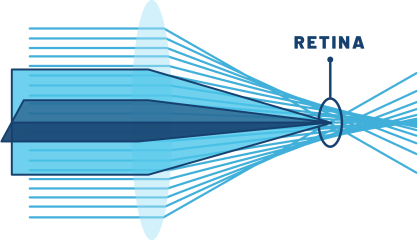
Optical system with positive
spherical aberration
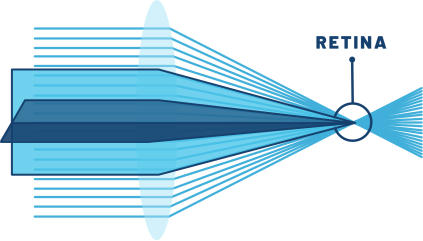
Optical system with no
residual aberration
Vision with spherical aberration†
Absence of spherical aberration‡


Vision with spherical aberration†
Absence of spherical aberration‡


‡Simulated retinal image in the absence of any spherical aberrations viewing the scene at approximately 412 feet (125 m) over a 6 mm pupil.
REFERENCE: 1. Data on file. Bausch & Lomb Incorporated. Rochester, NY.